How Can Smarter AI Lead Qualification Turn Noise into Opportunities
Key Takeaways
AI transforms noisy, unqualified lead lists into prioritised, sales-ready opportunities using fit and intent scoring.
SMEs don’t need more leads; they need better, high-probability buyers at the right time to reduce wasted outreach.
AI improves SDR performance by eliminating manual research, highlighting active buyers, and recommending personalised messaging.
Integrating AI into CRM systems is becoming standard: improving accuracy, prioritisation, and reducing cost per acquisition.
The strongest model for SME growth combines AI qualification with human SDR expertise for scalable, conversion-driven outbound.
AI helps SDR teams book more meetings by prioritising high-intent buyers and eliminating bad leads. The future of outbound technology belongs to smarter qualification.
Smarter AI lead qualification transforms chaotic, low-value lead lists into clear, high-quality opportunities by analysing intent, fit, timing, and behaviour.
For SMEs with limited resources, it improves sales performance by cutting wasted outreach, improving accuracy, and converting “noise” into real pipeline growth.
Why Do SMEs Struggle with Lead Noise in the First Place?
Every SME wants more leads, very few want more bad leads.
Lead noise happens when:
CRMs are filled with outdated or unqualified contacts
Teams rely on manual research and gut feeling
Outreach is sent to everyone instead of the right people
Inconsistent follow-ups bury opportunities
There’s no clear insight into who is ready to buy
Noise makes sales teams busy, not productive.
The result?
Sales representatives spend more time chasing the wrong people than speaking with high-potential buyers.
This is where smarter AI qualification becomes a game-changer.
What Is AI Lead Qualification and How Does It Work?
AI lead qualification replaces guesswork with data-driven clarity. It evaluates every lead using four core engines:
1. Data Enrichment and Cleansing
AI updates missing fields, fixes errors, enriches company profiles, and removes duplicates, instantly increasing CRM accuracy and reliability.
2. Behavior and Engagement Analysis
AI detects buying signals humans often miss, such as:
Repeated visits to pricing or comparison pages
Time spent on product pages
Webinar and content engagement
Email responsiveness
Digital research and review behaviour
These subtle cues reveal who is becoming interested and who is dropping off.
3. Predictive Fit Scoring
AI aligns each lead to the SME’s ideal customer profile (ICP) by analysing:
Industry
Company size
Job role
Tech stack
Budget signals
Historical conversion patterns
4. Intent Detection and Timing Signals
AI monitors intent data to identify when a prospect is actively researching a solution.
Instead of asking “who do we contact?”, AI creates a ranked list of:
High-intent buyers
Medium-intent leads for nurturing
Low-value contacts to deprioritise
This is how AI turns lead chaos into structured clarity.
Why Is AI the Solution to Lead Noise?
AI has shifted from being “a useful tool” to becoming the default standard for modern sales teams.
A HubSpot-referenced “AI in Sales 2025” report, published by Cirrus Insight, found that:
43% of sales teams had adopted AI by 2024, up from 24% in 2023
The takeaway?
When adoption nearly doubles in one year, the industry isn’t experimenting—it’s transforming.
AI is the solution because it:
Filters out low-quality leads instantly
Highlights the highest-probability buyers
Prioritises outreach based on readiness and fit
Reduces manual research and SDR fatigue
Improves meeting quality and conversion rates
AI doesn’t just create more leads, it creates better ones.
“Accuracy + Prioritisation”: How AI Improves Sales-Ready Lead Flow
AI transforms static lead lists into a dynamic, prioritised pipeline by scoring prospects on two axes:
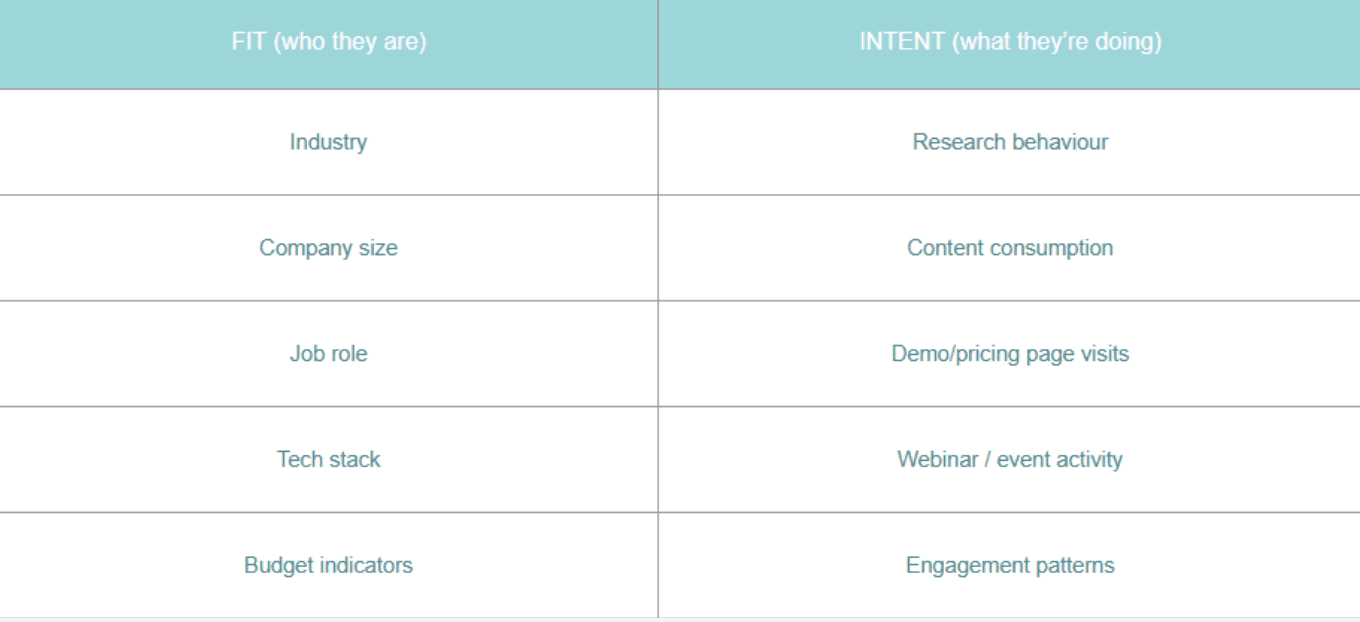
This dual-scoring approach has a measurable impact.
According to Martal Group’s 2025 Lead Generation Statistics:
Using AI in lead generation delivers - 50% more “sales-ready leads” and reduces customer acquisition cost by up to 60%
For SMEs seeking sustainable growth, that combination, more qualified leads at lower cost.is a breakthrough.
How AI Reduces Wasted Outreach for SDR Teams
Wasted outreach is one of the biggest hidden drains on SME budgets.
AI reduces waste by:
Removing bad or low-value leads
Highlighting active buyers with intent
Suggesting the ideal message approach
Identifying the best time to follow up
Predicting which contacts will respond
SDRs receive daily, prioritised lead lists, resulting in:
More meetings booked
Higher show rates
Less burnout
Lower operational cost
More consistent pipeline growth
AI turns noisy outreach into high-yield outbound activity.
How AI Improves Personalisation - Without a Larger Team
AI enables personalisation at scale, without sounding “automated”.
Personalisation includes:
Industry-specific angles
Role-based value propositions
Adaptive email and LinkedIn copy
Timing suggestions
Tone and sentiment optimisation
Relevance drives engagement. Engagement drives revenue.
What AI Tools Are Most Useful for Lead Qualification?
SMEs commonly use:
HubSpot AI
Salesforce Einstein
Apollo AI
Clay
6sense
ZoomInfo Intent
Drift / Exceed.ai
Lavender
Seamless.ai
Regie.ai
These platforms power data enrichment, scoring, intent detection, and personalised outreach.
Another proof of this trend:
A Digital Silk industry report states that:
79.1% of CRM users say AI-powered CRM features are important, and the AI-CRM market is projected to reach USD 11.04B in 2025.
AI in CRM isn’t a fad, it’s becoming foundational infrastructure.
AI + Outsourced B2B Lead Generation = Scaled Growth for SMEs
AI alone doesn’t close deals. Humans still build trust and move conversations forward.
Pairing AI with outsourced SDR teams gives SMEs the best of both worlds:
AI tools already configured
Multilingual SDRs
GDPR-compliant data handling
Proven messaging frameworks
Immediate operational scale
Lower overhead vs. in-house hiring
The result: faster activation, higher-quality meetings, and predictable pipeline growth.
What Does AI-Qualified Lead Data Look Like?
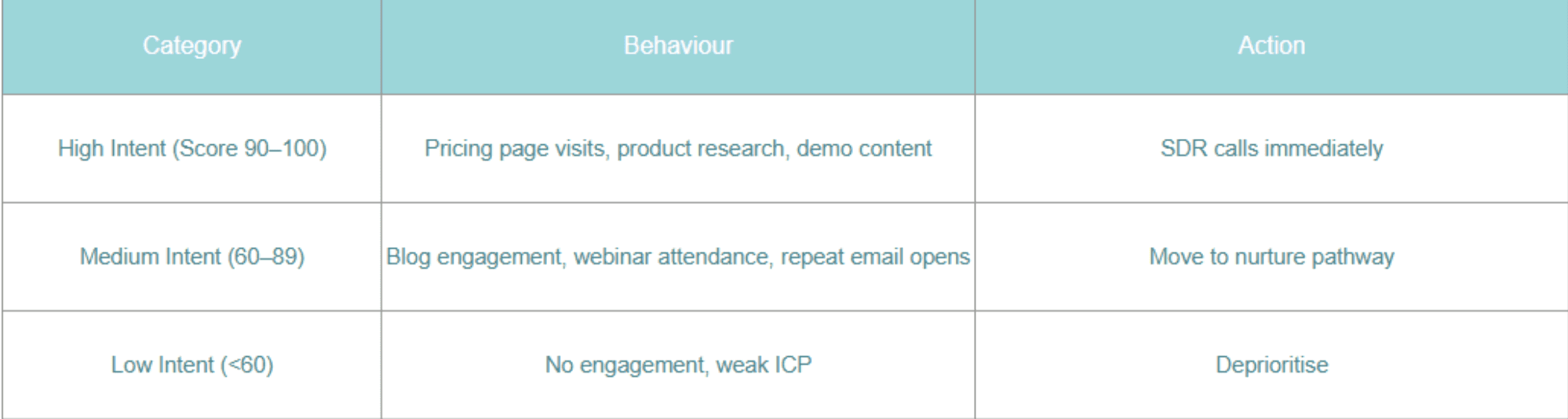
AI qualifies leads continuously, not once.
Metrics SMEs Should Track to Measure AI Success
Key performance indicators include:
SQL conversion rate
Meeting show rate
Time-to-first-touch
Lead-to-opportunity ratio
Cost per qualified meeting
Pipeline velocity
Deal acceleration speed
When qualification improves, every downstream metric improves.
How SMEs Can Adopt AI Without Complexity
A simple implementation path:
Clean CRM data
Define ICP and scoring rules
Add behaviour and intent tracking
Introduce predictive scoring
Layer in AI-powered outreach
Optionally combine with SDR-as-a-Service
Review scoring and performance weekly
AI becomes easier, and more effective, with expert support.
Final Takeaways - Why AI Qualification Is Now Non-Negotiable
Smarter AI qualification turns overwhelming, noisy lead lists into predictable revenue outcomes.
Bottom line:
AI cuts wasted outreach
Identifies high-value prospects automatically
Generates more sales-ready leads at lower cost
Makes SDR teams significantly more productive
AI + human SDRs is the strongest modern outbound model
The future of B2B growth doesn’t belong to teams who send more messages—it belongs to the teams who get smarter about who they message.